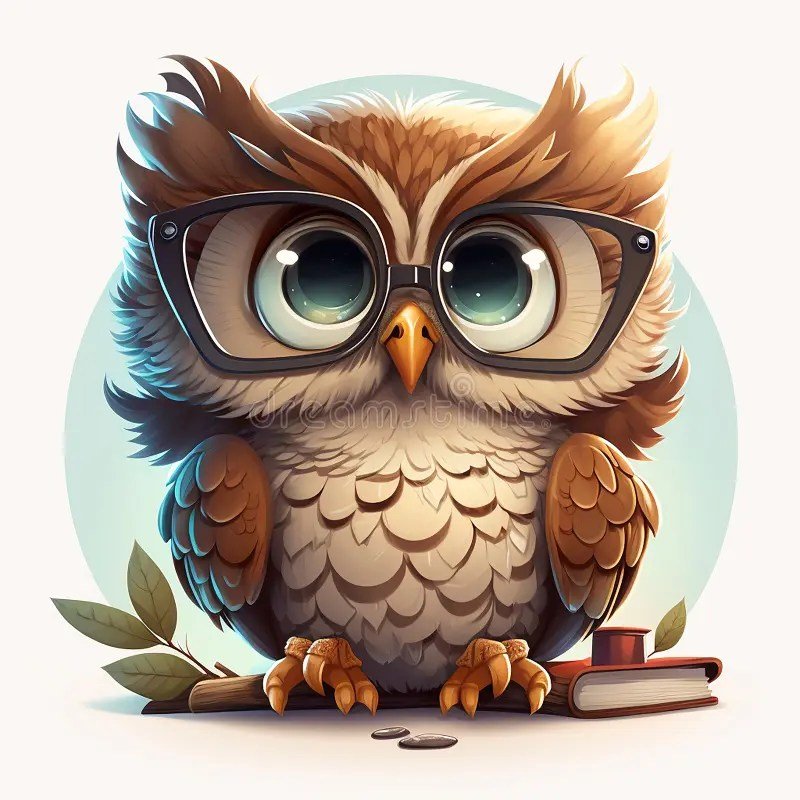
Picture an owl in an animated world. What do you see? Odds are, it's not just a bird; it's a character teeming with intelligence, perhaps a hint of mystery, or even a dry, sarcastic wit. The power of Popular Cartoon Owl Character Design lies in its ability to immediately communicate a deep, nuanced personality, leveraging centuries of shared human symbolism to create characters that resonate and endure. These aren't just feathered friends; they're often the wise mentors, the quirky academics, or even the unexpected villains who leave an indelible mark on our collective imagination.
It's a testament to good design that these characters become instant archetypes. Whether they're delivering ancient lore or simply a well-timed "who," cartoon owls embody a powerful blend of visual shorthand and narrative utility.
At a Glance: What Makes Cartoon Owls So Compelling
- Built-in Wisdom: Owls are visual shorthand for intelligence, mystery, and old-soul energy, giving animators an instant head start.
- Design for Impact: Big eyes, solemn posture, and often a calm demeanor instantly convey knowingness.
- Voice is Key: Measured, often older voices deepen the perception of sagacity, even when it's comedic.
- Narrative Utility: They're perfect for delivering exposition, offering guidance, or even subverting expectations for humor or villainy.
- Memorable Examples: From the kind Friend Owl to the sarcastic Archimedes, their varied personalities prove the versatility of the archetype.
- Beyond Wisdom: Some designs lean into their predatory nature, silent flight, or unique head turns for dramatic effect.
The Ancient Allure: Why Animators Choose Owls
Before an animator even draws a feather, the owl comes loaded with cultural baggage – the good kind. In folklore and mythology across the globe, owls are synonymous with wisdom, knowledge, and secret insights. They are creatures of the night, observing silently, their large, piercing eyes seeming to miss nothing. This inherent symbolism is a goldmine for character designers, offering a rich foundation upon which to build compelling personalities.
Think about it: a character doesn't need to speak a single word for us to project intelligence onto them if they're an owl. This is an incredible advantage in visual storytelling, creating instant readability. Beyond the myths, real-life owl traits like their nearly silent flight, their ability to rotate their heads almost 360 degrees, and their forward-facing, predatory eyes contribute immensely to their character design potential. Animators can exaggerate these features to enhance a character's mystique, humor, or even their capacity for threat.
The Four Pillars of Cartoon Owl Wisdom: More Than Meets the Eye
So, how do animators consistently make owls the go-to symbol for sagacity in cartoons? It's a strategic blend of design choices and narrative purpose.
1. Design Language: The Visual Shortcut to Knowledge
A picture is worth a thousand words, and with cartoon owls, it's often a thousand words of quiet intellect. Their design naturally lends itself to conveying wisdom. The large, front-facing eyes, often exaggerated in cartoons, suggest deep observation and insight. A character with big, unblinking eyes can appear thoughtful, even knowing. Combine this with a typically still, upright posture that suggests patience and careful consideration, and you've got a visual blueprint for an intelligent being. They don't fidget or flail; they observe. This allows animators to create an immediate visual shortcut, letting audiences instantly categorize the character as a source of information or guidance. Want to delve deeper into these visual cues? Consider mastering character design fundamentals for any aspiring creator.
2. Voice Casting: Giving Wisdom a Sound
The sound an owl makes is often as iconic as its look. In cartoons, owls are frequently gifted with voices that enhance their perceived wisdom. This usually means an older, more measured tone – perhaps a deep baritone, a gentle alto, or even a slightly gravelly voice that implies years of experience. They tend to speak slowly, deliberately, as if carefully weighing each word. This vocal pacing and timbre instantly reinforce their role as a sage or mentor, making their advice feel weighty and considered. The strategic use of voice is a huge part of the nuanced art of voice acting in animation, truly bringing characters to life.
3. Plot Utility: The Convenient Conveyor of Lore
In many animated narratives, there comes a point where the protagonist (or the audience) needs to understand the history of a magical artifact, the prophecy of an ancient evil, or the rules of a fantastical world. An owl character is perfectly suited to deliver this exposition. Unlike a random background character spouting facts, an owl's inherent wisdom makes its delivery of lore feel natural, earned, and believable. They can be the keepers of ancient texts, the oracles of the forest, or simply the knowledgeable elder who has "seen it all." This isn't just a convenient plot device; it's a way to maintain narrative flow without feeling forced.
4. Comedic Contrast: When Wisdom Goes Awry
While the "wise owl" is a powerful trope, it's also incredibly fertile ground for comedy. What happens when the supposedly wise owl is actually a windbag, full of platitudes but lacking in genuine insight? Or when they’re easily distracted, forgetful, or even wrong? This subversion creates an evergreen source of humor. The expectation of wisdom sets up a punchline where the owl character's flaws are highlighted, often to hilarious effect. This playful bending of expectations is a clever way to keep audiences engaged and shows the versatility of subverting established character tropes.
Beyond the Bookshelf: Iconic Owl Characters and Their Lasting Lessons
The pantheon of popular cartoon owls is diverse, each character adding a unique feather to the genre's cap. Let's explore some of the most memorable and what makes their designs stick. For more fascinating insights into animated birds, you might want to Explore charming owl cartoons beyond these specific examples.
The Benevolent Mentors and Guides
These owls are the heart of many stories, offering comfort, counsel, and a steady presence. Their designs often lean into softness and approachability.
- Friend Owl (Disney’s Bambi, 1942): The quintessential forest uncle, Friend Owl is the blueprint for a calm, advice-giving mentor. His design is simple, round, and warm, with large, expressive eyes that convey patience. He offers guidance without ever dominating, a true supportive figure.
- Big Mama (The Fox and the Hound, 1981): A maternal truth-teller, Big Mama offers emotionally real life wisdom. Her design is robust and comforting, with a knowing gaze that sees past superficialities. She embodies a down-to-earth wisdom, a stark contrast to some more academic owls.
- Professor Owl (Disney Melody, an Adventures in Music short): An enthusiastic music teacher, Professor Owl makes complex music theory engaging. His design is classic and professorial, often wearing glasses, reflecting his role as an educator. He shows that wisdom can also be spirited and passionate.
- Mr. Owl (Franklin): As Franklin's teacher and guide, Mr. Owl represents patient wisdom without ego. His design is friendly and reassuring, making him an accessible figure for young audiences learning about the world.
- X the Owl (Mister Rogers’ Neighborhood): A curious and sensitive character, X helps teach emotional intelligence. His puppet design is simple but effective, conveying a gentle nature that fosters understanding and empathy. He teaches us that wisdom isn't just about facts, but feelings too.
The Sarcastic Sages and Intellectual Snobs
Not all wise owls are gentle. Some use their intellect with a sharp wit, or even a touch of superiority, making for dynamic and often humorous interactions.
- Archimedes (The Sword in the Stone, 1963): Merlin’s sarcastic academic sidekick, Archimedes is portrayed as clearly smarter than most, and often frustrated by the ignorance around him. His design is slender, sharp, and expressive, with a perpetually exasperated look. He embodies a realistic version of wisdom – brilliant but impatient. His character proves the narrative utility in character design extends to developing complex personality through simple means.
The Lovably Pompous Know-It-Alls
These owls lean into the comedic subversion, often believing themselves wiser than they truly are, creating endearing and humorous characters.
- Owl (Winnie the Pooh): A long-winded storyteller whose "wisdom" comes more from confidence and self-importance than accuracy. His design is classic, somewhat formal, and often seen in a tree, perched above others. His tales, while meandering, are always delivered with absolute conviction, making his frequent factual errors all the funnier.
- Mr. Know It Owl (Tootsie Pop commercial): A smug professor who immediately fails his own experiment due to temptation (the allure of a Tootsie Pop). His design is archetypically academic, often with glasses and a monocle. He brilliantly turns the concept of wisdom into a punchline, showing that even the wisest can have their weaknesses.
The Unconventional and Mysterious Owls
Some owl characters break free from the traditional wisdom trope entirely, showcasing the vast potential of owl design for diverse roles, including villainy or unique heroism. The visual storytelling through powerful symbols like owls can be twisted in intriguing ways.
- Clockwerk (Sly Cooper): A robot owl villain, Clockwerk embodies immortal obsession and weaponized jealousy. His design is mechanical, angular, and terrifying, making the "wise owl" trope feel like a patient, calculating, and terrifying threat. He's a stark reminder that intelligence can be turned to malevolent purposes.
- Bubo (Clash of the Titans): A mechanical sidekick iconic for its brave, gadget-like presence. While not strictly a cartoon, Bubo's animated presence as a loyal, resourceful companion is a key example of an owl design that conveys heroism and utility without needing to speak, often relying on expressive movements.
- Rowlet (Pokémon): An owl-inspired Pokémon resembling a barn owl, known for being quiet and watchful. Its design is adorable and somewhat understated, emphasizing its connection to nature. Its evolution line, growing into an "owl archer" concept, showcases how designers can take a base animal concept and develop unique combat or skill sets within a character's journey.
- Longclaw (Sonic the Hedgehog): A guardian figure, protective and mythic, with a more realistic owl design compared to many cartoon counterparts. Her presence is formidable and noble, highlighting the owl's potential as a fierce protector and a source of ancient knowledge.
- Screech (The Incredibles 2): A superhero satire of the owl archetype, focused on being impressive. His design emphasizes powerful flight and a sleek, almost technological look, playing on the owl's silent flight and predatory grace within a superhero context.
Crafting Your Own Enduring Owl Character: Beyond the Who
If you're looking to design your own popular cartoon owl character, consider these elements to ensure they resonate and stick with audiences.
1. Define Their Core Wisdom (or Lack Thereof)
Is your owl truly wise, or do they just think they are? This distinction will inform everything from their facial expressions to their dialogue. A genuinely wise owl might have calm, thoughtful eyes, while a puffed-up pose and perpetually surprised expression could hint at an owl who's more bark than bite. Decide if their wisdom is academic, emotional, practical, or even mystical.
2. Exaggerate Key Owl Traits for Personality
- Eyes: Are they massive, twinkling with mischief, or narrowed in suspicion? Big eyes are great for conveying emotion and intelligence.
- Head Turn: Can they rotate their head dramatically for a comedic reveal or a sudden, intimidating glare? This real-life trait is a powerful visual tool.
- Silent Flight: Does their movement emphasize graceful, almost ghostly presence, or are they clumsy, clattering fliers?
- Feather Texture: Is their plumage soft and inviting (Big Mama) or sharp and angular (Clockwerk)?
3. Voice and Demeanor: The Unseen Layers
Think about the voice your owl would have. Is it a slow, deliberate cadence? A rapid-fire academic delivery? Or perhaps a high-pitched, easily startled squeak that belies their wise appearance? Their posture, gestures, and overall energy should align with this vocal choice. A stoic owl might barely move, while a frantic academic might gesticulate wildly with their wings.
4. Thematic Role: How Do They Serve the Story?
Will your owl be:
- The Oracle: Delivering prophecies and ancient knowledge.
- The Mentor: Guiding the protagonist with life lessons.
- The Comic Relief: Poking fun at wisdom or their own perceived intellect.
- The Observer: A silent, watchful presence who eventually takes action.
- The Adversary: Using their cunning and patience for villainous ends.
Understanding their narrative utility will help you tailor their design to maximize their impact on the plot.
Common Misconceptions About Cartoon Owls
Let's clear up a few common misunderstandings about these feathered philosophers.
- "All cartoon owls are wise." Absolutely not! While it's a popular trope, characters like Winnie the Pooh's Owl or Mr. Know It Owl prove that an owl's wisdom can be exaggerated for comedic effect, or even subverted entirely. Villains like Clockwerk use intelligence for evil, showing the darker side of the archetype.
- "Cartoon owls are only for children's stories." While many appear in kids' media, the depth of character an owl can convey (sarcasm, complex emotional wisdom, menacing intelligence) makes them suitable for narratives across all age groups. Longclaw in Sonic is a good example of a more serious, guardian figure.
- "Their design is always the same." As the examples above show, owl designs range from fluffy and endearing (Rowlet) to sleek and intimidating (Clockwerk, Longclaw). The basic owl silhouette is a starting point, not a restrictive template.
The Enduring Appeal: Why They Stick Around
Cartoon owl characters endure because they are an instant visual shortcut to meaning. They effortlessly convey guidance, lore, a "teacher" moment, or even a deep, unspoken understanding. This innate readability allows them to slot into diverse roles, from the purest mentor to the most deceptive villain, making them incredibly versatile tools in a storyteller's arsenal. Their presence adds a layer of depth and often, a touch of the timeless, to any animated tale.
We inherently trust an owl's gaze, respect their quiet dignity, and often chuckle at their occasional foibles. It's this potent combination of established symbolism and creative freedom that ensures popular cartoon owl character designs will continue to captivate audiences for generations to come.
Your Next Hoot: Bringing Owl Wisdom to Life
Whether you're an aspiring animator, a writer crafting new worlds, or simply a fan admiring the artistry, understanding the magic behind popular cartoon owl character designs unlocks a deeper appreciation for the craft. These characters aren't just birds; they're reflections of our own quest for knowledge, our need for guidance, and our love for stories that truly stick. So next time you see a wise old owl on screen, take a moment to consider the careful thought that went into making them so instantly, wonderfully themselves.